 Most airlines don’t gather aircraft washing data that would be readily available for auditing purposes, often taking days to compile it when requested. As ESG reporting requirements grow increasingly strict, this data gap will soon be hard, or even impossible, to ignore.
Aviation’s sustainability reporting landscape is becoming increasingly rigorous on a global scale. ICAO’s CORSIA scheme requires international airlines to monitor and offset emissions, while the ISSB’s climate disclosure standards (IFRS S1 and S2) are being adopted across multiple jurisdictions as the baseline for sustainability reporting. The U.S. SEC has introduced climate disclosure rules for publicly traded airlines, and similar requirements are emerging in Canada, the UK, and elsewhere. Within this global framework, the EU’s Corporate Sustainability Reporting Directive (CSRD) stands out as particularly comprehensive and prescriptive. As CSRD expands to cover more businesses through 2026 and 2027, airlines and ground handlers operating in European markets will face especially detailed requirements: environmental metrics that were once tracked loosely now require robust, auditable documentation. Aircraft exterior washing is one operational area where this shift toward precision and verifiability is becoming particularly acute.
Why aircraft washing matters for compliance
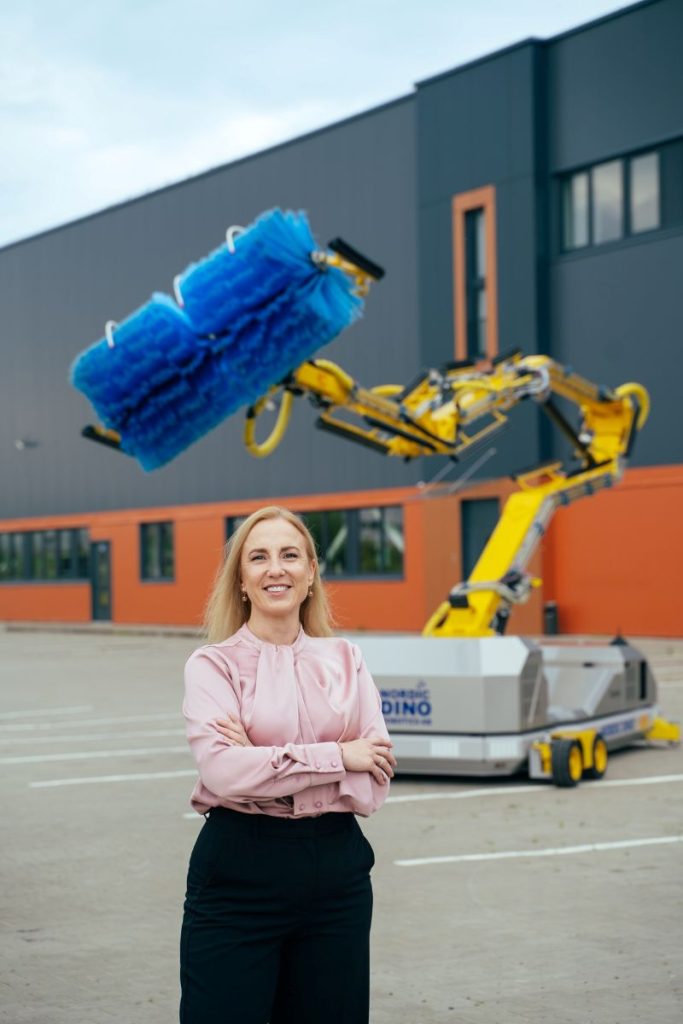
“For years, aircraft cleaning was simply a maintenance checkbox,” says Veronika Andrianovaite, Chief Commercial Officer at Nordic Dino. “Now, with CSRD requirements taking effect and aviation-specific reporting standards expected to come into force in 2026, operators need to demonstrate exactly how much water they use, what chemicals are applied, and how these processes connect to their broader sustainability commitments.”
Under CSRD, companies must report on material sustainability matters with external assurance – a significant step up from previous voluntary disclosures. For airlines, this means granular data on resource consumption across operations, including ground handling activities. The European Sustainability Reporting Standards include specific requirements around water usage and resource management that apply directly to processes like aircraft exterior cleaning.
Water usage is an important metric to keep in mind: manual washing can use up to 11,300 liters for a single aircraft. When scaled across an entire fleet, this number becomes quite staggering, especially when it comes to large commercial airlines with fleets nearing 1,000. Chemical usage presents similar documentation challenges. And because a clean aircraft maintains better aerodynamic efficiency, washing practices connect, albeit indirectly, to fuel consumption – another closely scrutinised ESG indicator.
One of the key problems is that manual washing generates inconsistent data. When different crews use different techniques at different locations, the result is variation that’s difficult to measure, compare, or report with confidence. As Andrianovaite puts it: “If you cannot standardize the process, you cannot produce reliable data. And if you cannot produce reliable data, you cannot meet the kind of disclosure requirements that are now becoming mandatory.”
Standardization through automation
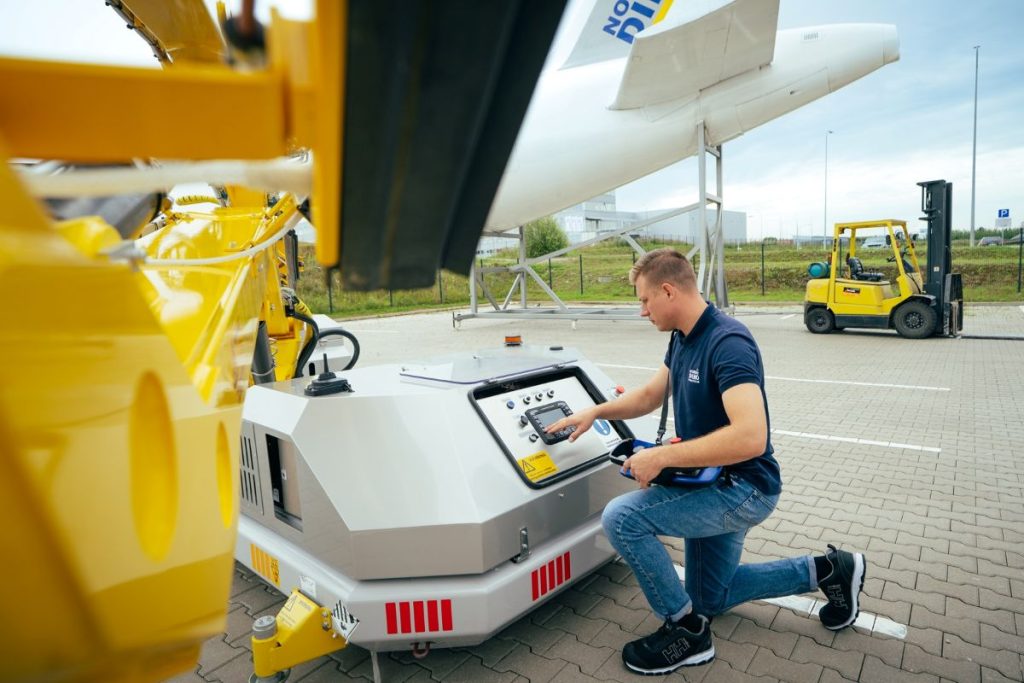
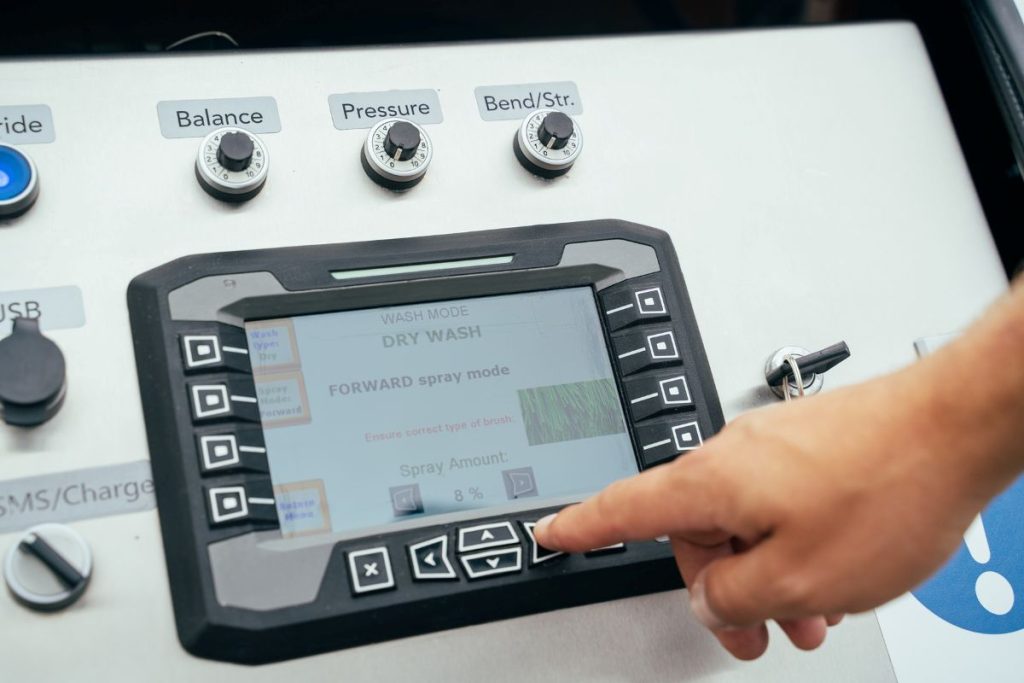
This is the context in which robotic aircraft cleaning machines are gaining strategic relevance beyond their more basic operational benefits. Automated systems like Nordic Dino deliver standardized wash cycles with consistent parameters: the same water pressure, coverage pattern, duration, and chemical application every time.
Critically, each wash generates an automatic cleaning log that captures key data fields – timestamp, aircraft registration, volume of water consumed, duration of cleaning cycle, and quantities of chemicals agents applied. This traceable, timestamped documentation can feed directly into compliance reporting systems, giving operators the audit trail that manual processes struggle to provide.
The efficiency gains are substantial. Nordic Dino’s systems can reduce aircraft exterior washing time by up to 80 percent – bringing wide-body jets like the Airbus A330 from six hours to two, and narrow-body aircraft like the Boeing 737 from three hours to one. Water consumption drops by as much as 84 percent, from the aforementioned 11,300 litres to around 1,800 litres per wash. Similar optimization is also achieved with respect to chemical usage.
The initial investment in automated aircraft exterior cleaning systems can be substantial. However, operators increasingly view this expenditure as compliance infrastructure rather than discretionary spending. As reporting requirements tighten and the cost of retrofitting undocumented processes becomes clearer, the benefits of switching to a modern automated system will quickly outweigh the upfront expense.
“Airlines are starting to treat washing intervals the way they treat other scheduled maintenance,” says the Nordic Dino expert. “Not as something that happens when an aircraft looks dirty, but as a documented process integrated into operational planning and the frameworks airlines use for sustainability reporting.”
Building compliance-ready ground operations
The aviation industry has historically paid little attention to aircraft washing as a data management challenge. But as CSRD tightens disclosure requirements and investors start to give more weight to ESG performance in their decisions, every quantifiable process can make life for airlines that much easier.
“The regulatory direction is clear,” Andrianovaite notes. “Companies that build standardized, data-driven processes now will find compliance easier as requirements stiffen. Those relying on manual, undocumented procedures will face increasing pressure to catch up.”
Nordic Dino’s robotic washing systems offer airlines and ground handlers a practical way of migrating away from ad hoc procedures and towards measurable, auditable aircraft cleaning services. For operators getting ready to meet the next wave of sustainability reporting requirements, the question is no longer whether to standardize ground operations data – but how quickly they can begin.