 Being a global industry, aviation brings people together from around the world. For the most part, this works out well, and even has a net positive effect when it comes to breaking down barriers between people from different countries. But how exactly should airlines handle cultural, linguistic, and religious differences to ensure safety in the sky? Franco Narcisi, Chief Pilot at Avion Express, a leading narrow-body ACMI operator and part of Avia Solutions Group, shares key insights.
From local hiring to multinational crews
Due to different regulatory practices, airlines in some countries have kept their pilot rosters uniform, mostly hiring from their home countries. This, however, is not the case with larger international carriers, ACMI (Aircraft, Crew, Maintenance, and Insurance) operators, and airlines from rapidly growing regions like the Middle East and Southeast Asia, all of whom are now employing pilots from dozens of countries globally.
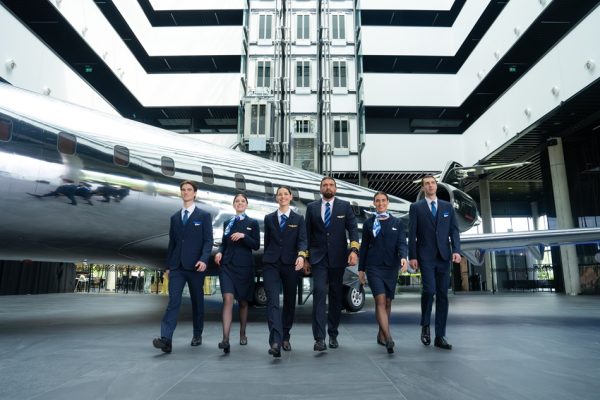
“Most airlines have multinational flight crews, especially carriers from the Emirates – a country where more than 80% of residents are expats – that hire pilots from every corner of the globe,” Franco Narcisi, Chief Pilot at Avion Express, explains. “This also applies to ACMI operators like us. We have around 55 countries represented in our cockpits, depending on the month.”
Rather than being merely incidental, this diversity is often essential for airlines serving global markets with varying seasonal demands. ACMI operators, which provide aircraft and crews to other airlines, must be particularly adaptable to international operations.
Language requirements that exist only on paper
In order to reduce the complexities a multilingual crew can bring, the aviation industry has long embraced English as a standard. The International Civil Aviation Organisation (ICAO), a United Nations agency established in 1944, officially recognised English as the language of aviation in 1951. Decades later, in 2003, the ICAO introduced a rating scale from 1 to 6 that assesses various language competences including pronunciation, structure, vocabulary, fluency, and comprehension. These standards aim to ensure clear communication between pilots and air traffic controllers worldwide, thereby addressing safety concerns that have contributed to numerous incidents over the decades.
“Our internal policy requires all crew to speak English as the official language, even when flying with someone from the same country where English is not the mother tongue,” notes Narcisi. Rather than pertaining exclusively to compliance, this standardisation has become integral to operational efficiency in general.
As might be expected, implementation of these standards can vary across jurisdictions and institutions. While the requirements are well defined, differences in assessment practices and oversight can lead to inconsistent outcomes. In EASA environments and within Avion Express this risk is mitigated through structured screening including English evaluation during recruitment and within simulator based assessments.
Ideal standardisation vs. pragmatic considerations
When pilots talk to other pilots or ground controllers, standardised aviation English performs quite well. Problems might arise only when international airline pilots coordinate with fueling crews, ramp agents, and other ground staff whose command of English may be somewhat limited. “If ground staff encounter situations outside standard scenarios, their English skills might lapse and sometimes they switch to their native language,” Narcisi observes.
This challenge is especially palpable in regions like Latin America, where ground personnel often speak only basic operational English. As a result, airlines operating in these regions frequently adopt pragmatic solutions such as assigning crew members who speak local languages to specific routes whenever possible. In Avion Express this is supported by our highly multinational pilot workforce which increases the likelihood of having relevant language capability available within the crew pool when operationally appropriate.
Managing religious and cultural practices
Airlines must also accommodate religious and cultural practices that go well beyond simple language differences. Crew members and passengers may have requirements to pray at specific times of the day, or observe dietary restrictions during fasting periods. These practices must be respected without compromising on safety.
Operators have different approaches to accommodating these needs. Some Middle Eastern airlines display the direction of Mecca on passenger screens, which allows Muslim passengers to pray without leaving their seats.
During recruitment, airlines may also inquire about prospective hires’ religious practices and how flexible they are in terms of their observation. This should not be done to discriminate, but rather to ensure that safety protocols can be maintained during all the phases of flight. The key lies in finding the right balance between respecting religious and cultural needs of the crew while maintaining the uncompromising safety standards that aviation demands.
A bright future?
The industry has made significant progress at improving the way carriers manage their diverse international personnel since the ICAO first established its language requirements. However, this progress is now stalling due to the fact that responsible airlines are currently forced to undertake much of this work themselves.
Success requires more than just language proficiency standards. It demands cultural awareness, flexible operational strategies, and comprehensive training programs that address the unique dynamics of diverse cockpits.