 On a one-hour flight, switching to a different aircraft can save a traveller thousands. So can landing at an alternative airport a slightly longer drive from the final destination.
Neither choice necessarily means compromising on the passenger experience. Both show how private aviation now works: there are more ways to fly than ever, and more ways to pay for the wrong one.
Jet cards, memberships, fractional shares and on-demand charter all promise the same thing: a private aircraft when it is needed. They differ in what the customer commits, what the customer controls and what happens when plans change.
“The most expensive mistake is choosing the product first and then making the journey fit it,” said Filipe Mendonca, VP Passenger Sales – Europe at Chapman Freeborn. “Start with the route, the schedule, the passengers, the luggage and how often you fly. The right product follows from that.”
Three models, three trade-offs
Membership and jet-card programmes sell predictability. They suit travellers who fly often, on similar routes, and who value knowing in advance what access they have and how it is priced.
Fractional ownership is a longer-term commitment: an ownership share combined with access to a managed fleet. According to the National Business Aviation Association, fractional customers will not necessarily fly on the aircraft associated with their share, but on a suitable aircraft available within the programme.
On-demand charter carries no long-term commitment. The aircraft is chosen for each journey, which works well when routes, group sizes or travel frequency vary. The trade-off is that price and availability move with the market.
None of the three is best in general. Each is best for a particular pattern of travel, and a traveller whose pattern changes may find that last year’s answer no longer fits.
Match the aircraft to the mission
Aircraft choice is where habit most often adds cost. Customers ask for a particular jet because they know the manufacturer, have flown on it before or assume that larger means better.
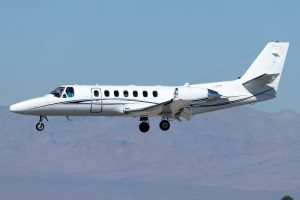
A long-range jet on a short European sector is the typical case. If a midsize aircraft carries the same passengers and luggage in comfort, the extra range is paid for and never used.
The cheaper aircraft is not the lesser one. Range, runway requirements, seats, luggage space and expected weather decide whether an aircraft suits a journey. Size and reputation alone do not. A good recommendation starts from those requirements, and a customer is entitled to ask why a given aircraft was proposed.
Know who is flying you
Whatever the product, every flight is performed by an operator, and the name on the programme or the quote is not always the name on the operating certificate. This is the one comparison that the headline price does not show.
“Price and aircraft type are easy to compare,” Filipe Mendonca said. “Who operates the flight, under which certificate and with what record, is not. That is the part a customer should never leave unchecked.”
Look beyond the obvious airport
Travellers tend to request the largest or best-known airport in a city. An alternative may be closer to where they are actually going, less congested and cheaper for private aircraft to use.
Price is only part of it. Opening hours, runway length, parking, ground handling capacity and slot restrictions all determine whether an itinerary works as planned. An airport that looks ideal on a map can be the wrong operational choice, which is why the journey should be assessed door to door, not runway to runway.
One-way journeys need a wider view
A customer who approaches a single operator is choosing from that operator’s fleet. If the aircraft has to be repositioned before the flight or flown back to base afterwards, those empty sectors find their way into the price.
Searching the wider charter market can identify an aircraft already near the departure point or already heading in the right direction. Positioning costs do not disappear in every case, but they are no longer a given.
“A single operator can only offer its own fleet,” Filipe Mendonca said. “A broker has access to a much wider market, including aircraft already flying in your direction. On a one-way trip, that is often the difference between paying for one flight and paying for two.”
Timing matters as much as product
More choice has made comparisons by headline price, aircraft type or product name less meaningful. It has not changed the fact that every model draws on the same finite supply of aircraft, and at peak periods the whole market wants them at once.
“On the busiest weekends of the year, the question is not what the flight costs but whether an aircraft is available at all,” Filipe Mendonca said. “Whatever the product, the customers who get it right are the ones who start with the journey and start early.”